Life Cycle Assessment
Life Cycle Assessment for ZINC
The first LCA for primary zinc was completed in 1998, and subsequently updated in 2007, 2014 and 2022. Each global update has expanded geographic and market representation for the primary zinc LCA. Updates to the LCA webpage are ongoing and will be completed in the winter of 2026.
Life Cycle Assessment (LCA) is a powerful tool to identify and evaluate the environmental consequences of a material, product, process, or service over its life cycle. IZA’s Life Cycle Assessment team provides comprehensive data enabling the evaluation of zinc’s environmental footprint from global warming potential (GWP) to water consumption.
To ensure the highest accuracy and representation, IZA collects primary data from production sites, performs quality checks, and conducts LCA in-house according to international standards and best practices.
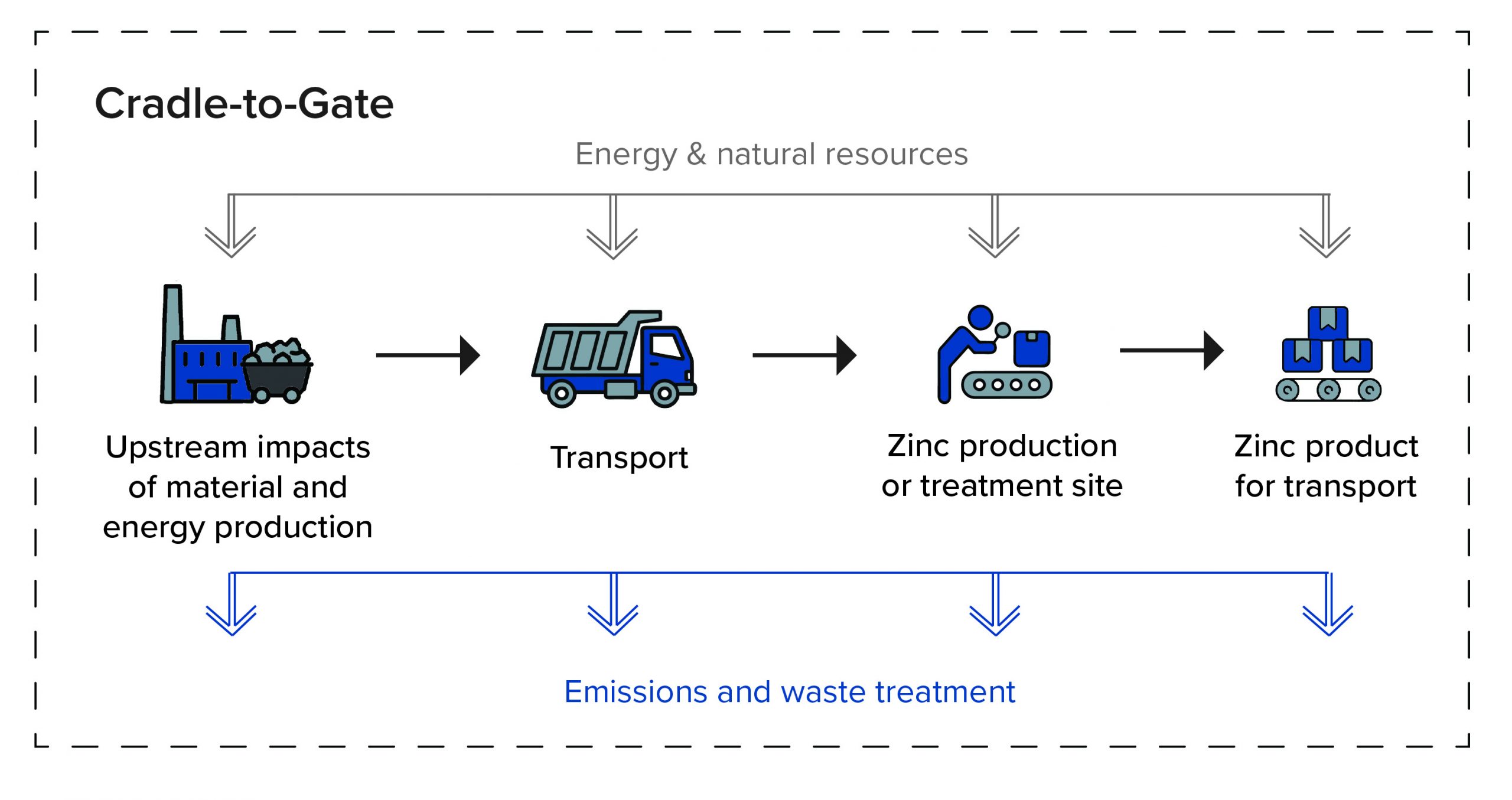
Our datasets focus on intermediate zinc products and cover the "cradle-to-gate" journey: from raw material extraction and recycled material collection to the refined metal stage. This information provides the essential baseline data required for downstream reporting, including product LCAs and Scope 3 emissions.
IZA is committed to communicating zinc's environmental footprint transparently and credibly to everyone. IZA members, regulators, downstream users, and the general public can access this open data to understand zinc’s sustainable production and use.
Available on this page:
• LCA reports providing comprehensive environmental profiles
• Clear Guidance and methodology on how data is calculated
• Integrated files for LCA software users
LCA Reports Available for Download
View Interactive Results at zinctoolsportal.org
To learn more about IZA’s Life Cycle Assessment work, email lca@zinc.org.
 Life cycle assessment guidance for recycled zinc die-casting alloys, recycled zinc, and recycled zinc-based alloys
 Life cycle assessment of recycled zinc die-cast (zamak) alloys
IZA Role in LCA
Increasingly the zinc industry is being asked to provide information to downstream users of zinc and zinc containing products on the environmental footprint of the materials it produces. Material specifiers and product engineers in key end-use markets such as construction and transportation are becoming more interested in selecting materials that have the best environmental profile while meeting traditional cost, quality and technical performance criteria.
Through regular surveys and Life Cycle Inventory updates from its members, the IZA LCA for primary zinc represents the most comprehensive environmental profile for zinc. The process requires documenting:
- Resource requirements (energy and non-energy)
- Environmental releases from upstream operations (e.g. mining and refining) and downstream product use
- Benefits of zinc for product durability and recyclability

Benefits from zinc use occur when extending the life of galvanized steel products and utilizing secondary zinc to create new products.
Zinc Life Cycle Assessment by the Number
Global Impact
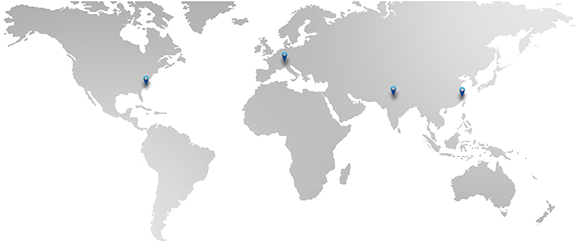
The current global LCA for primary zinc includes data from 26 mines and 23 smelters, which cover 2.5 Mt of zinc concentrate and 3.97 Mt of Special High-Grade Zinc, representing 20 and 29 % of global production, respectively.
Improvements
When interpreting LCA data, the focus currently lies on the carbon footprint, which in LCA is expressed as Global Warming Potential (GWP). The Carbon Footprint for primary zinc production was calculated to be 3.5 kg CO2eq per kg SHG zinc at the global average.